How Complex Is the Phrase “Arms Up”?
Two words. That’s it.
On the surface, “arms up” looks about as simple as a coaching cue can get. But when you’re working with autism and neurodivergent athletes, even the simplest instruction carries hidden layers — and how it’s delivered can be the difference between a successful rep and a frustrated athlete.
It’s Not Just About the Words
When we give a verbal cue like “arms up,” we’re not just asking the athlete to hear the words. We’re asking them to process the language, connect it to a physical reference point for what “up” actually means, and then translate that understanding into a coordinated motor action.
That’s a lot happening in two words.
If the athlete doesn’t have a clear reference point for “up,” or can’t yet connect the verbal cue to the movement, repeating the phrase won’t fix the disconnect. It just leads to frustration — for the athlete and the coach — and a rep that doesn’t get performed the way it should.
Ask Before You Cue
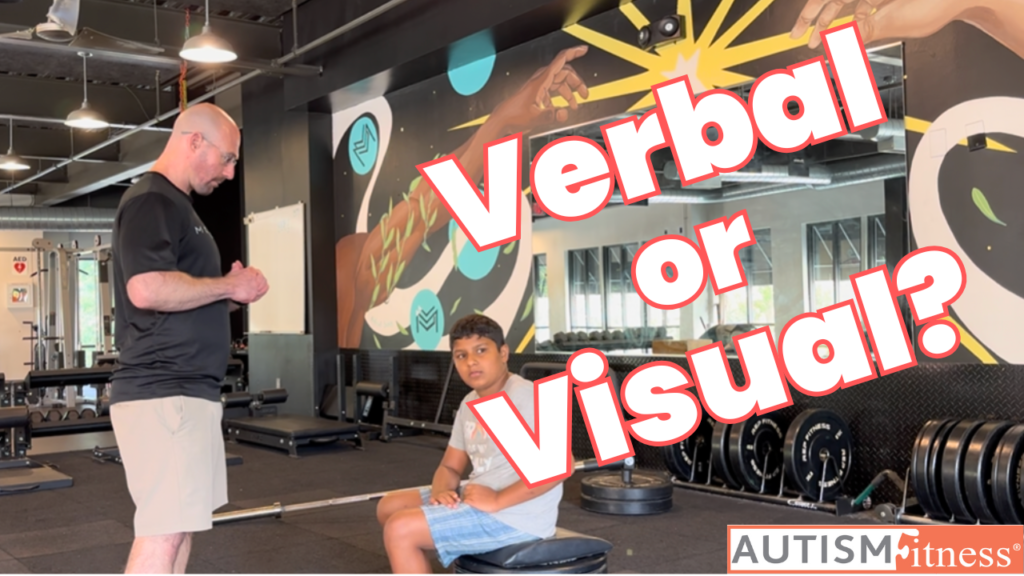
Good coaching decisions start with good questions. Before defaulting to a verbal prompt (“arms up”) or a visual one (the coach physically demonstrating the movement), ask:
1. What is the athlete’s current baseline skill with this exercise?
2. What is the least intrusive prompt I can use?
3. Does the athlete need an additional modification for the exercise?
4. When I use this prompt, does it consistently improve performance of the exercise?
Athletes on the spectrum often navigate processing delays, motor control challenges, and dysregulation — all of which make thoughtful cueing a core part of effective coaching, not an afterthought.
Avoid the Habit Trap
It’s easy to fall into what we call the “habit trap”: continuing to use a cue simply because it’s the one we always use, even after it’s stopped working. A good general rule is to try a prompt twice — if it isn’t landing, it’s time to shift your approach rather than repeat it a third or fourth time.
Sometimes the answer is a blend: pairing a visual demonstration with a verbal cue for the same movement. If that combination helps an athlete perform a squat, press, band row, or push-up more safely and effectively, that’s a win.
The End Goal: Fade the Cue
Whatever combination of prompts gets an athlete performing an exercise safely and effectively, remember the long-term goal isn’t to lean on that support forever — it’s to fade it. Cues are a bridge to independent, confident movement, not a permanent scaffold.
—
*Want to go deeper on cueing strategies, prompting hierarchies, and how to coach autism and neurodivergent athletes effectively? This week’s Tuesday Training breaks down visual vs. verbal cues, when to use each, and the questions to ask along the way.
https://youtu.be/HNOyjqSd_Q4
Ready to Coach with Confidence?
Understanding how to cue, modify, and adapt exercises for neurodivergent athletes isn’t intuitive — it’s a skill set. If you’re a coach, trainer, or clinician who wants to serve this population with real competence and confidence, it’s time to get Autism Fitness Certified.