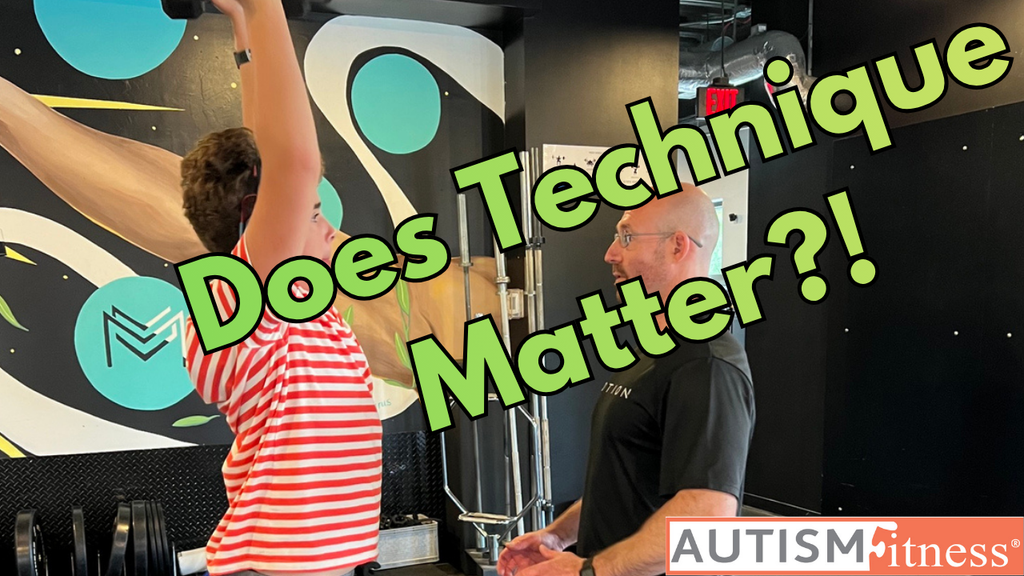
Is having the “right exercise” enough?
Is “any exercise” enough?
Short answer: no — but here’s the longer, more useful answer.
Technique Can Be Taught
Technique is important, but it isn’t fixed. It can be shaped, cued, and improved over time. An exercise is a tool for a purpose — and a tool is only as good as the person who knows what it’s for and how to use it. That’s where programming and coaching come in.
In the first few sessions with an athlete, the goal — from a physical standpoint — is simple: establish a baseline of performance for each exercise. Once you know where an athlete is starting from, you know whether modifications, additional cues, or a different approach are needed.
But let’s back up further. What is technique, really, when it comes to strength training? And how do we use it to safely and effectively guide an athlete toward greater strength and independence — both in and out of the training session?
The Questions Coaches Ask (and the Ones We Should Ask First)
The questions we hear most often sound like this:
- “What exercises are best for autism?”
- “What if they can’t do this exercise?”
- “Should we switch to a different exercise if it’s not working?”
These are fair questions, but they skip a step. Before we can answer them well, we need to ask a few grounding questions first:
- What exercises make a strength and fitness program truly effective?
- How are these exercises performed safely with optimal technique?
- What are the reliable ways to scale or modify an exercise?
Answer these, and the original questions start to answer themselves.
Three Keys to Understanding, Implementing, and Improving Technique
Know Your Standards. A standard performance of any exercise — a squat, a press, a band row — means the athlete can perform the movement with motor control, healthy range of motion, and stability throughout the set. Before you can coach technique, you need to know what the exercise is supposed to look like, and take baseline data on the athlete’s current ability against that standard.
Know Your Supports. Scalability is everything here. Being able to modify the challenge level of an exercise — up or down — lets the athlete build strength and motor control gradually, at a level where they can actually succeed. Technique isn’t all-or-nothing; it’s built in layers.
Make It Meaningful. Cognitive functioning — both neurological and neuromuscular — plays a real role in performance. Reinforcing technique with behavior-specific praise, along with other proven strategies, helps shape great performance over time and makes the learning stick.
Practical Action
Good technique isn’t a box to check before “real” training starts — it is the training. It’s how an exercise becomes a repeatable, safe, and meaningful tool for building strength, independence, and confidence, both inside the gym and out in daily life.
If this is the kind of coaching you want to bring to your athletes, clients, or students, this is exactly what we teach inside the Movement for Movement. Join us, and take the next step by becoming an Autism Fitness Certified Pro — learn the standards, the supports, and the strategies that turn exercise into real, lasting progress.